
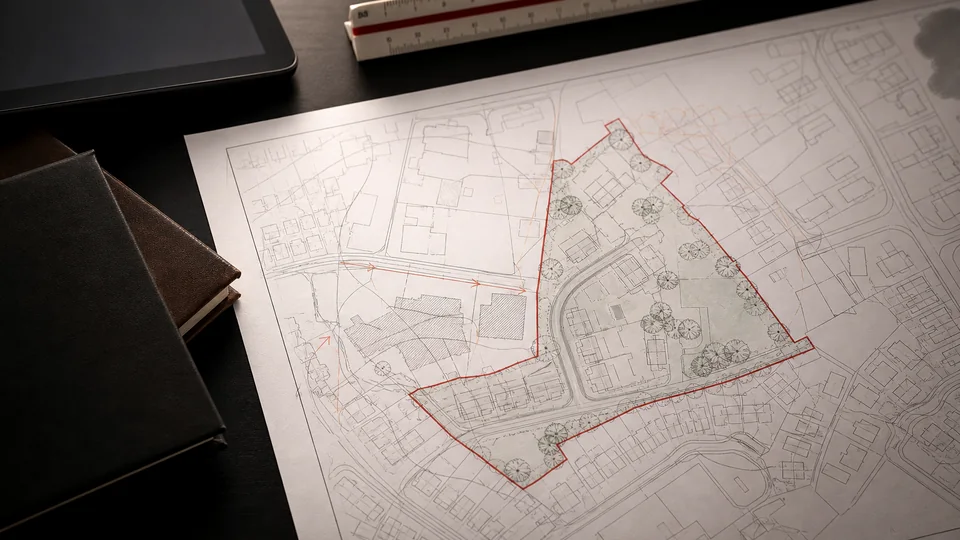
Site appraisal
Understand the policy position before acquisition, drawings or consultant spend escalates.
New homes & self-builds
Planning strategy for single new dwellings, self-build homes, replacement dwellings and residential plots where the principle of development needs to be understood early.
Before a plot, garden land or replacement dwelling is taken too far, Well Planned helps test settlement policy, access, design context, neighbour impact and whether the proposal has a realistic route to approval.
Understand the policy position before acquisition, drawings or consultant spend escalates.

Decide whether pre-application advice, design adjustment or direct submission is the right next step.
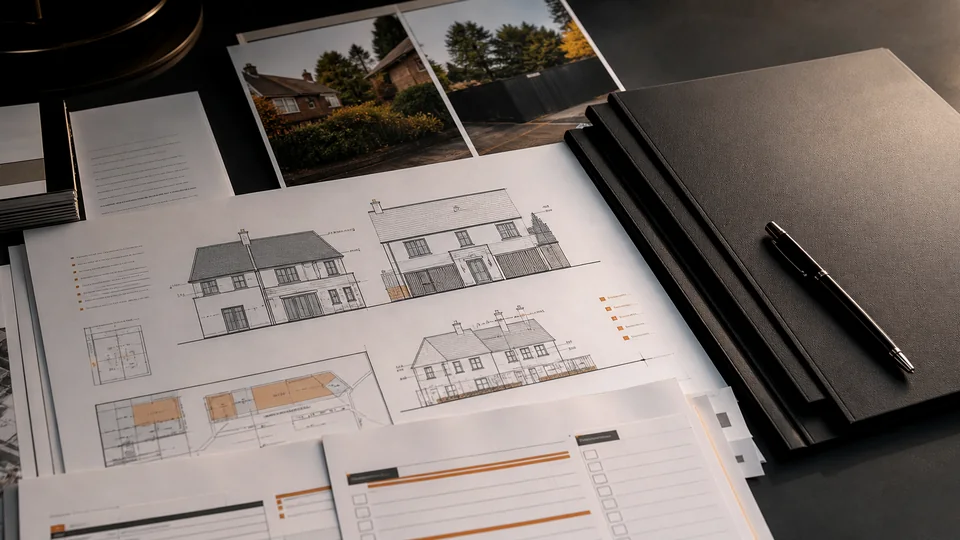
Identify the drawings, statements and technical inputs needed for a credible case.
Looking at a plot, garden site or replacement dwelling?
Ask for a route checkResidential plot strategy
New homes, self-build plots and replacement dwellings need an early planning strategy because the key issue is often the principle of development, not the final architectural style. Settlement boundaries, countryside policy, access, character and local precedent can all affect the route.
Well Planned helps assess whether the site has a credible planning path, whether pre-application advice would be useful and what evidence is needed before a planning application is prepared.