
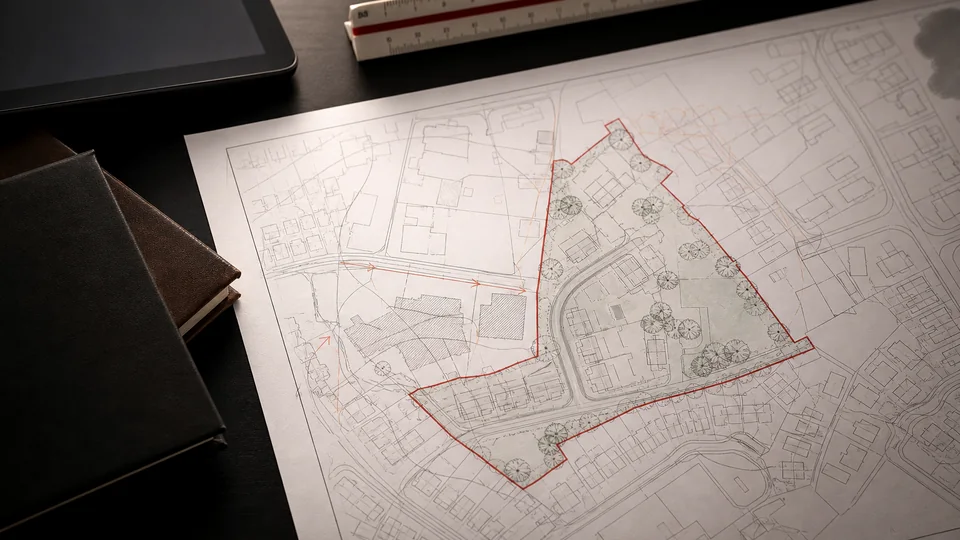
See the risk
Understand what could block, delay or weaken the proposal before the route is fixed.
Strategy & feasibility
Early planning strategy for homeowners, families, developers and investors who need to understand policy risk, route options and the evidence needed before committing to drawings, purchase or submission.
Strategy work is about identifying the cleanest route early: what the site can support, what the local authority is likely to question and what evidence will make the proposal stronger.
Understand what could block, delay or weaken the proposal before the route is fixed.

Compare options and decide whether to apply, adjust, seek pre-application advice or pause.
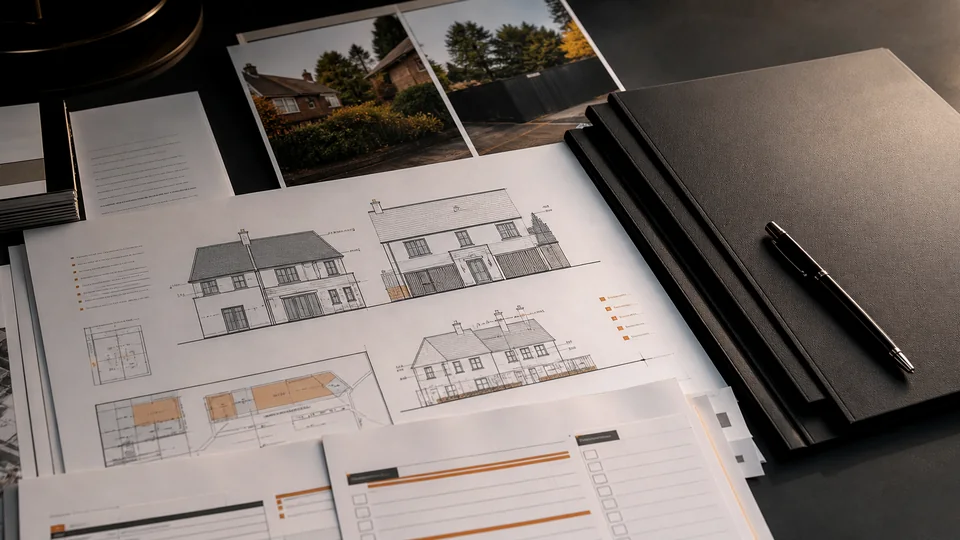
Identify the information needed to give the submission the best chance of being taken seriously.
Unsure whether the project is worth pursuing?
Start with strategyPlanning feasibility
Planning strategy work helps decide whether a proposal is worth pursuing, what route should be used and what risks need dealing with before drawings, purchase or submission. That can include policy review, planning history, local controls and permitted development rights.
For uncertain sites, Well Planned can help compare options such as pre-application advice, redesign, a full planning application, a change of use route or pausing until the planning risk is better understood.